
Case Study: Is Anybody Listening?
Summary
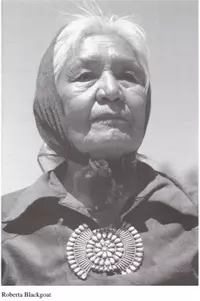
Roberta Blackgoat![[creative commons]](/images/creativecommons_16.png)
The case is an example of how Western-based property law, Navajo-Hopi Land Settlement Act, Public Law 93-531 has undermined traditional Native American practices of collaboration and consensus.
Learning Goals
Learning objectives:
- Study the history and culture of the Navajo and Hopi peoples;
- Understand the history behind the reservations and their creations;
- Become familiar with the lived experience of Navajos at Big Mountain and other areas on Hopi Partitioned Land;
- Understand the forces behind the Navajo-Hopi Land Settlement Act of 1974;
- Consider the legal and human rights issues at play in the relocation of 12,000 Navajos;
- Understand what precipitated relocation and the role of the United States government;
- Debate whether mineral development by energy companies such as Peabody Coal contributed to the relocation law;
- Consider Western-based property law versus traditional Navajo and Hopi political structures based on community consensus;
- Discuss why the Navajos on Hopi Partitioned Land (HPL) were unsuccessful in having P.L. 93-531repealed;
- Debate whether or not Jenny Manybeads et al. were denied their indigenous rights as stated in the U.N. Declaration on the Rights of Indigenous Peoples.
Context for Use
See Teaching Notes.
Description and Teaching Materials
Audience
This case is suitable for college classrooms. It can be used in a wide variety of disciplines, including ethnic studies, political science, history, law, sociology, philosophy, environmental studies, composition, and Native studies.
Implementation, discussion questions and further research suggestions are included in the teaching notes found at the bottom of this page
Teaching Notes and Tips
Download this PDF >>
Assessment
Discussion questions included. Assessment is at the discretion of the educator and how this case is applied and the expections thereof.
References and Resources
Case references included with Case Study 1Copyright (2012) held by The Evergreen State College. Please use appropriate attribution whenusing or quoting this case. Cases are available at the Enduring Legacies Native Cases website at http://www.evergreen.edu. The author isa member of the faculty at Skagit Valley College.2This case has been significantly improved by the comments and suggestions of Jovana Brown, Loma Ishii, Ronald Maldonado, and Linda Moon Stumpff.
Citation
(2013). Case: Is Anybody Listening? http://nativecases.evergreen.edu/