
![[creative commons]](/images/creativecommons_16.png)
Nuclear power is the generation of electricity from controlled reactions within the nucleii of atoms that release energy used to boil water, the steam from which drives a turbine to generate electricity . All commercial nuclear plants presently rely upon nuclear fission reactions.
As of 2010, approximately 14 percent of the world's electricity was derived from nuclear power, chiefly centered in the United States (with 31% of the world's total nuclear power capacity), France (16%), and Japan (10%).
The International Atomic Energy Agency (IAEA) reports that, as of November 21, 2012, there are 437 nuclear power reactors in operation in 30 countries, plus Taiwan. Another 64 reactors under construction in 14 countries which if operational today would increase the worldwide electrical generation capacity of nuclear power by 17%. One hundred and forty reactors have been permanently shut down since the beginning of commercial nuclear power in the 1950s; another 3 are in long term shut down.
In addition to electricity generation, nuclear power is presently used to power over 150 marine vessels, both civilian and military; and two countries (Russia and the USA) have deployed nuclear powered spacecraft.
There is significant debate about the cost effectiveness and safety of nuclear power. Safety concerns about the release of radiation were highlighted by accidents at Three Mile Island in the United States (1979) and at Chernobyl in Ukraine (1986 when Ukraine was part of the Soviet Union), and recently, in Fukushima, Japan (2011). Other concerns relate to the long term safety of spent fuel, and the diversion of reactor fuel for use in weapons.
Because it does not result in the emission of greenhouse gases, nuclear power has received increased support in recent years as an alternative to fossil fuels to mitigate global warming.
The severe damage to several nuclear reactors at the Fukushima Daiichi plant in Japan in March 2011, following a devastating earthquake and tsunami, has led to increased attention to safety issues related to nuclear power. Subsequently, Germany announced its intention to phase out its nine nuclear power reactors by 2022. Other nations, most notably China, which has 26 new reactors under construction (November 2012), are increasing their use of nuclear power.
Research has been undetaken for many decades into nuclear fusion (an alternative form of nuclear energy to fission), which theoretically could generate significant power without many of the environmental concerns connected to fission. The time horizon for commercially viable nuclear fission electricity generation is highly uncertain and likely to be many decades away if acheivable.
History
Ancient Greek philosophers first developed the idea that all matter is composed of invisible particles called atoms. The word atom comes from the Greek word, atomos, meaning indivisible.
Scientists in the 18th and 19th centuries revised the concept based on their experiments. By 1900, physicists knew the atom contains large quantities of energy. British physicist Ernest Rutherford was called the father of nuclear science because of his contribution to the theory of atomic structure. In 1904 he wrote:
If it were ever possible to control at will the rate of disintegration of the radio elements, an enormous amount of energy could be obtained from a small amount of matter.
Albert Einstein developed his theory of the relationship between mass and energy one year later. The mathematical formula is E=mc2, or "energy equals mass times the speed of light squared." It took almost 35 years for someone to prove Einstein's theory.
James Chadwick discovered the neutron in 1932, and soon thereafter in 1934 physicist Enrico Fermi conducted experiments in Rome that showed neutrons could split many kinds of atoms. In paryicular, he produced nuclear fission by colliding high energy neutrons with uranium. He did not get the elements he expected. The elements were much lighter than uranium.
In the fall of 1938, German scientists Otto Hahn and Fritz Strassman fired neutrons from a source containing the elements radium and beryllium into uranium (atomic number 92). They were surprised to find lighter elements, such as barium (atomic number 56), in the leftover materials. These elements had about half the atomic mass of uranium. In previous experiments, the leftover materials were only slightly lighter than uranium.
Hahn and Strassman contacted Lise Meitner in Copenhagen before publicizing their discovery. She was an Austrian colleague who had been forced to flee Nazi Germany. She worked with Niels Bohr and her nephew, Otto R. Frisch. Meitner and Frisch thought the barium and other light elements in the leftover material resulted from the uranium splitting " or fissioning. However, when she added the atomic masses of the fission products, they did not total the uranium's mass. Meitner used Einstein's theory to show the lost mass changed to energy. This proved fission occurred and confirmed Einstein's work. (see Disintegration of Uranium by Neutrons: a New Type of Nuclear Reaction)
In 1939, Bohr came to America. He shared with Einstein the Hahn-Strassman-Meitner discoveries. Bohr also met Fermi at a conference on theoretical physics in Washington, D.C. They discussed the exciting possibility of a selfsustaining chain reaction. In such a process, atoms could be split to release large amounts of energy.
Scientists throughout the world began to believe a self-sustaining chain reaction might be possible. It would happen if enough uranium could be brought together under proper conditions. The amount of uranium needed to make a self-sustaining chain reaction is called a critical mass.
Fermi and his associate, Leo Szilard, suggested a possible design for a uranium chain reactor in 1941. Their model consisted of uranium placed in a stack of graphite to make a cube-like frame of fissionable material.
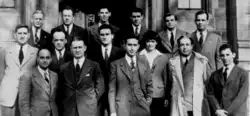
| Figure 1. Enrico Fermi (lower left) and US scientists who created the first fission event in Chicago, |
Early in 1942, a group of scientists led by Fermi gathered at the University of Chicago to develop their theories. By November 1942, they were ready for construction to begin on the world's first nuclear reactor, which became known as Chicago Pile-1. The pile was erected on the floor of a squash court beneath the University of Chicago's athletic stadium. In addition to uranium and graphite, it contained control rods made of cadmium. Cadmium is a metallic element that absorbs neutrons. When the rods were in the pile, there were fewer neutrons to fission uranium atoms. This slowed the chain reaction. When the rods were pulled out, more neutrons were available to split atoms. The chain reaction sped up.
On the morning of December 2, 1942, the scientists were ready to begin a demonstration of Chicago Pile-1. Fermi ordered the control rods to be withdrawn a few inches at a time during the next several hours. Finally, at 3:25 p.m., Chicago time, the nuclear reaction became self-sustaining. Fermi and his group had successfully transformed scientific theory into technological reality. The world had entered the nuclear age.
The first nuclear reactor was only the beginning. Most early atomic research focused on developing an effective weapon for use in World War II. The work was done under the code name Manhattan Project which led to the two atomic bombs used in August 1945 against Japan to bring World War II to an end. However, some scientists worked on making breeder reactors, which would produce fissionable material in the chain reaction. Therefore, they would create more fissionable material than they would use.
After the war, the United States government encouraged the development of nuclear energy for peaceful civilian purposes. Congress created the Atomic Energy Commission (AEC) in 1946. The AEC authorized the construction of Experimental Breeder Reactor I at an experimental facility near Arco, Idaho. The reactor generated the first electricity, around 100 kilowatts of power, from nuclear energy on December 20, 1951.
On June 26, 1954, a "semi-experimental" nuclear power plant at Obninsk, Russia with a net electrical output of 5 MW was connected to the power grid. On August 27, 1956, the Calder Hall nuclear power plant in northern England, with a net electrical output of 50 MW was connected to the national grid.
A major goal of nuclear research in the mid-1950s was to show that nuclear energy could produce electricity for commercial use. The first commercial electricity-generating plant powered by nuclear energy was located in Shippingport, Pennsylvania. It reached its full design power in 1957. Light-water reactors like Shippingport use ordinary water to cool the reactor core during the chain reaction. They were the best design then available for nuclear powerplants. (Also see: Nuclear Energy and the Fossil Fuels by M. King Hubbert). Private industry became more and more involved in developing light-water reactors after Shippingport became operational.
On October 10, 1957, the core of the Windscalenuclear reactor (which was being used for research and defense purposes) in Cumbria, England caught fire and burned for nearly two days before being extinguished. The incident resulted in the release of radioactive material into the surrounding area that spread across much of northern Europe and western Scandinavia. Within days of the accident, the British government initiated an official inquiry into the causes of the fire. Although no serious environmental or health effects were noted in the aftermath of the event, it was nonetheless the largest accidental release of radioactive material in the history of the British nuclear industry.
The International Atomic Energy Agency (IAEA) was set up by the United Nations in 1957. One of its functions was to act as an auditor of world nuclear safety, and this role was increased greatly following the Chernobyl accident. It prescribes safety procedures and the reporting of even minor incidents. Its role has been strengthened since 1996. Every country which operates nuclear power plants has a nuclear safety inspectorate and all of these work closely with the IAEA.
The use of nuclear-generated electricity has grown substantially since then. Nuclear power as a percentage of total U.S. electricity generation increased quickly from nearly 5% in 1973 to 9% in 1975 and then to the current level of about 20% by 1988. The first "oil shock" in 1973, when an an oil embargo by members of the Organization of Arab Petroleum Exporting Countries led to a shortage of oil fuels and a sharp rise in prices, led some countries like France and Japan to rapidly expand their use of nuclear power in the 1970s and eighties.
There have been three significant accidents in the 50-year history of civil nuclear power generation:
- Three Mile Island (USA 1979) where the reactor was severely damaged but radiation was contained and there were no adverse health or environmental consequences
- Chernobyl (Ukraine 1986) where the destruction of the reactor by steam explosion and fire killed 31 people and had significant health and environmental consequences. Apart from the initial deaths, the number of deaths resulting from the accident is unclear and a subject of considerable controversy.
- Fukushima (Japan 2011) where three old reactors (together with a fourth) were written off and the effects of loss of cooling due to a huge tsunami were inadequately contained.
The first two accidents led to significant changes in the regulation and operation of nuclear power plants and in a slowing of construction starts for new plants. The long term impact of the Fukushima is not yet clear, but already Germany, Switzerland, Italy, and Austria have resolved to reduce or eliminate their reliance on nuclear power in the aftermath of that event. However France plans to continue its current extensive nuclear program, as does the United Kingdom, and new plants are being planned in other parts of the world.
Nuclear Power Generation
Worldwide
The worldwide mix of primary fuels used to generate electricity has changed a great deal over the past four decades. Coal continues to be the fuel most widely used for electricity generation, although generation from nuclear power increased rapidly from the 1970s through the 1980s, and natural-gas-fired generation grew rapidly in the 1980s and 1990s. The use of oil for electricity generation has been declining since the mid-1970s, when oil prices rose sharply. Nuclear generating capacity additions began in the 1950s and now top 370 gigawatts worldwide.
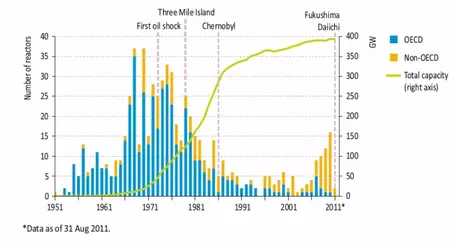
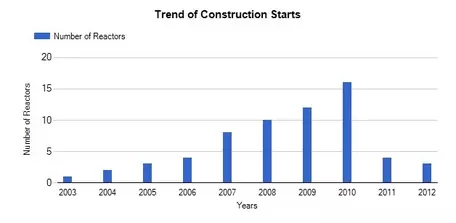
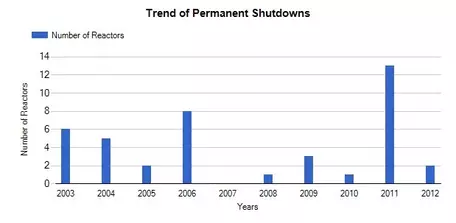
Figure 2. Worldwide Nuclear Electricity Generation and Nuclear reactor construction starts, 1951 " 2011. Source: World Energy Outlook 2011, International Energy Agency.
From the early 1970s to the early 1990s, nuclear power steadily grew around the world with brief periods of relatively slow growth following the accidents at Three Mile Island (North America, 1979) and Chernobyl (Former Soviet Union, 1986), as the nuclear industry absorbed the lessons learned from both accidents. Since then, nuclear power capacity has remained relatively stable throughout most of the world, with the exception of rapidly developing countries in Asia. The post-Fukushima (March, 2011) impacts on Japan's nuclear capacity and elsewhere is still evolving.
The International Atomic Energy Agency (IAEA) reports that, as of October 1, 2012, there are 435 nuclear power plant units with an installed electric net capacity of about 370 GW, which are in operation in 30 countries, plus Taiwan. Further, there 64 reactors under construction with an installed capacity of 62 GW are under construction in 14 countries.
Table 1. Nuclear power reactors world-wide, in operation and under construction, as of November 21, 2012 according to the International Atomic Energy Agency (IAEA) Power Reactor Information System.
| Country | In operation | Under construction | |||
| Number | Electr. net output MW |
Number | Electr. net output MW | ||
| Argentina | 2 | 935 | 1 | 692 | |
| Armenia | 1 | 375 | - | - | |
| Belgium | 7 | 5,927 | - | - | |
| Brazil | 2 | 1,884 | 1 | 1,245 | |
| Bulgaria | 2 | 1,906 | - | - | |
| Canada | 20 | 14,300 | - | - | |
| China -- Mainland -- Taiwan |
16 6 |
11,816 5,018 |
26 2 |
26,620 2,600 | |
| Czech Republic | 6 | 3,766 | - | - | |
| Finland | 4 | 2,736 | 1 | 1,600 | |
| France | 58 | 63,130 | 1 | 1,600 | |
| Germany | 9 | 12,068 | - | - | |
| Hungary | 4 | 1,889 | - | - | |
| India | 20 | 4,391 | 7 | 4,824 | |
| Iran | 1 | 915 | - | - | |
| Japan | 50 | 44,215 | 2 | 2,650 | |
| Korea, Republic | 23 | 20,671 | 3 | 4,980 | |
| Mexico | 2 | 1,300 | - | - | |
| Netherlands | 1 | 482 | - | - | |
| Pakistan | 3 | 725 | 2 | 630 | |
| Romania | 2 | 1,300 | - | - | |
| Russian Federation | 33 | 23,643 | 11 | 9,297 | |
| Slovakian Republic | 4 | 1,816 | 2 | 782 | |
| Slovenia | 1 | 688 | - | - | |
| South Africa | 2 | 1,830 | - | - | |
| Spain | 8 | 7,560 | - | - | |
| Sweden | 10 | 9,395 | - | - | |
| Switzerland | 5 | 3,263 | - | - | |
| Ukraine | 15 | 13,107 | 2 | 1,900 | |
| United Arab Emirates | 1 | 1345 | |||
| United Kingdom | 16 | 9,246 | - | - | |
| USA | 104 | 101,465 | 1 | 1,165 | |
| Total* | 437 | 371,762 | 62 | 61,930 | |
* Note two reactors in Canada were restarted after long-term shutdown in September and October 2012, bring the total for Canada to 20 and the world to 437.
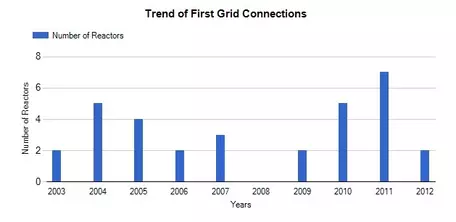
The two first grid connections in 2012 occurred in South Korea.
The three contruction starts in 2012 occurred in Russia, South Korea, and the United Arab Emirates.
The two permanent shutdowns in 2012 occurred in the United Kingdom.
Figure 3a, 3b, and 3c. Trends in first grid connections, construction starts, and permanent shutdowns. Source: International Atomic Energy Agency (IAEA) Power Reactor Information System.
The nations that have permanently shutdown the most reactors at the United Kingdom (29), the United States (28), Germany (27), and France (12).
The share of total electricity generation provided by nuclear power plants varies widely, as show in the figure below.
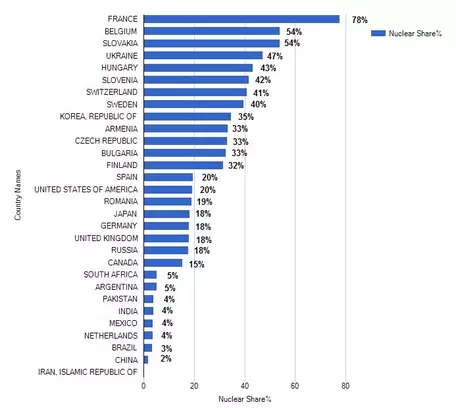
Figure 4. Share of electricity generation provided by nuclear power plants in different countries. Source: International Atomic Energy Agency (IAEA) Power Reactor Information System
See also: Nuclear Energy Agency (NEA)
United States
The United States has more nuclear capacity and generates more electricity from nuclear power than any other nation.
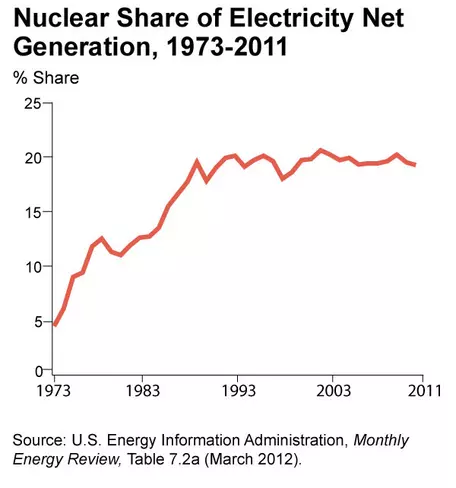
There are currently 104 operable commercial nuclear reactors at 65 nuclear power plants in 31 states. Since 1990, the share of the nation's total electricity supply provided by nuclear power generation has averaged about 20%, with increases in nuclear generation that have roughly tracked the growth in total electricity output. In 2011, U.S. nuclear plants generated 790 billion kilowatthours. Nuclear power provided slightly more than 19% of electricity and about 8% of all energy consumed in the United States.
The top five states for nuclear generation of electricity in 2011 were:
- Illinois
- Pennsylvania
- South Carolina
- New York
- North Carolina
The last new reactor to come on-line in the United States was the Tennessee Valley Authority's (TVA) Watts Bar 1 reactor in Tennessee, in February 1996. Nuclear expansion since 1996 has occurred through "uprating," the practice of increasing capacity at existing power plants. However, new reactors are expected to provide additional nuclear capacity in the future.
As of early 2012, the U.S. Nuclear Regulatory Commission (NRC) had active applications for a total of 28 new reactors, although it is unknown how many of the proposed reactors will be built. In February 2012, the NRC gave the first approval for constructing a new nuclear reactor in 30 years. The NRC approved Southern Company's application to build and operate two new nuclear reactors at the Vogtle nuclear plant, near Augusta, Georgia, which already houses two operating reactors. Four new nuclear reactors (Vogtle Units 3 and 4 and Summer Units 2 and 3) are expected to come on-line between 2016 and 2017.
Europe
Nine European countries generated over 30% of their electric power from nuclear sources in 2010. An additional five countries generated over 20% of their power from nuclear sources. Germany, which ranked second in both total and nuclear generation in 2010, has announced plans to phase out nuclear generation by 2022.
Recent issues in European energy policy include a reassessment of nuclear power following the accident at Japan's Fukushima nuclear facility in March 2011. While Germany, Switzerland, Italy, and Austria have resolved to reduce or eliminate their reliance on nuclear power in the aftermath of that event, France plans to continue its current extensive nuclear program, as does the United Kingdom.
Germany currently generates about a quarter of its electricity from nuclear power, yet announced plans to decommission its more than 20 gigawatts of nuclear capacity by 2022. Switzerland generates over a third of its electricity from nuclear sources, but has decided to halt development of new facilities. Existing plants will be permitted to operate until the end of their lifetime, effectively phasing out nuclear power in that country by 2034. Italy and Austria do not have commercial nuclear reactors; however, in a recent referendum, Italy voted against new nuclear construction, and Austria has decided to end their imports of electricity generated from nuclear sources by 2015.
There are 143 nuclear reactors in the European Union's (EU)'s 27 member states. Countries within the EU must consider EU-wide energy goals, which include a 20% decrease in greenhouse gas emissions by 2020 (from 1990 levels). Because nuclear power does not emit greenhouse gases, the loss of the nuclear component in the generation portfolio in some countries will make it harder for them to meet the national commitments that have been made in support of this EU-wide goal.
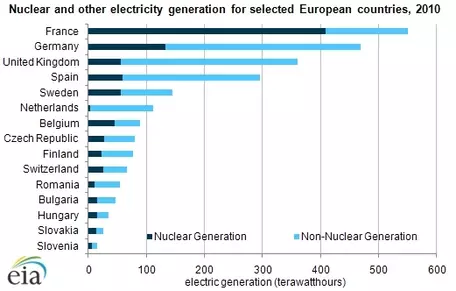
 Show caption
 Hide
HideFigure 6. Nuclear and other electrical generation for selected European countries, 2010. Source: International Atomic Energy Agency, Power Reactor Information System
Note: Countries without commercial nuclear reactors are not included. Belgium, Bulgaria, the Czech Republic, France, Hungary, Slovakia, Slovenia, Sweden, and Switzerland use nuclear energy for over 30% of their electricity generation.
Economics of Nuclear Power
Factors affecting cost calculations
The true costs of nuclear power is a topic of significant disagreement between different scholars and between advocates for and against use of nuclear power. Comparing the cost of nuclear power to other sources of electricity adds additional areas of disagreement. There are many reasons for this, including:
- which costs are included beyond the direct cost of construction and operation of a nuclear power plant, including long term waste disposal, decommisioning of a facility at the end of its useful life, cost of financing, liability costs, and many other factors over the entire life span of the reactor, and sometimes, of long periods after when waste continues to be hazardous;
- how to factor in possible market conditions that significantly impact the costs of the things that are included in any calculation, such as interest rates for financing, future energy costs, fuel costs, waste management costs, decommisioning costs, liability costs, energy demands, etc.;
- variations in technology (with in both nuclear and non-nuclear sources of energy);
- the operational timetime of a power plant and how close to its full operational capacity it operates at on average;
- how to factor in policy and regulatory incentives (and disincentives) provided by governments (national, regional, and local policies);
- how to factor in various "external" costs associated with nuclear and non-nuclear sources of energy such as environmental impacts, public safety, and, public concerns which can be a direct factor through various public policies, or shielded from the plant operators, also through public policies (which may change over time); and,
- whether and how to consider potential future costs that might be applied to carbon to mitigate climate change.
All of these factors, and others, can lead to very different, and legitimate, calculations of the absolute and relative costs of nuclear power. Many, even most, of these same factors can also impact calculations of the cost of ther sources of energy too.
Most scholars report that capital cost (the cost of funding a nuclear power plant) is the single most important factor determining the economic competitiveness of nuclear energy. The cost of capital varies significant with location, reactor type and age, market rates over time, and because of other factors.
Following is a summary of a number of different analysis of the costs associated with nuclear power as reported by a number of different sources. They are presented here in a very brief way, and the readed is encouraged to follow the links at the end of this article to the full reports behind each analysis and to look deeper into the specific details of each calculation. The studies below address (or not) the issue of capital cost in different ways.
Most of the results below are caluculation the the "Levelized Cost of Electricity" or "LCOE", which allocates the costs associated with a power plant (including the investment to build the plant) averaged over the energy produced over the lifetime of the plant. LCOE calculations are affected by assumptions made about mst of the factors listed above.
Sample calculations of cost
Organisation for Economic Co-operation and Development (OECD), Nuclear Energy Agency
The Nuclear Energy Agency (NEA) is a specialised agency within the Organisation for Economic Co-operation and Development (OECD), an intergovernmental organisation of industrialised countries based in Paris, France. It states:
OECD studies comparing the cost of electricity generation from different sources indicate that nuclear power is highly competitive on a lifetime cost per kWh basis (particularly when the costs of carbon-dioxide emissions of other power generation options are taken into account). Projected Costs of Generating Electricity 2010 calculates the levelised costs of electricity (LCOE; costs of generating electricity over a plant lifetime) from nuclear and fossil-fuel thermal power stations and from renewable technologies. The study covers 21 countries and gathered cost data for 190 power plants
Nuclear power is most competitive at low discount rates:
- When interest rates on financing (discount rates) are low (5%), nuclear is the most competitive power generation technology.
- When discount rates are higher (10%), coal and gas are as competitive as nuclear power, especially in regions where coal is inexpensive (such as in Australia or certain regions in the United States).
The relative competitiveness of different power generation technologies in each country is highly sensitive to the discount rate and slightly less, but still significantly sensitive, to the projected prices for CO₂, natural gas and coal.
The graphs below show the levelised costs of electricity (LCOE) for different technologies in different regions, at 5 and 10% discount rates.
Figure 7. Regional ranges of levelised costs of electricity for nuclear, coal, gas and onshore wind power plants (5% discount rate)
Source: Source: Projected Costs of Generating Electricity, IEA/ NEA, 2010
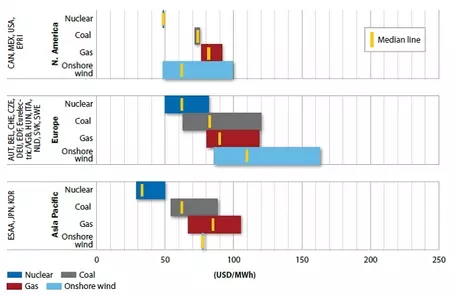
At a 5% discount rate, the levelised cost of nuclear electricity generation in OECD countries ranges between 29 USD/MWh (Korea) to 82 USD/MWh (Hungary). Construction costs represent by far the largest share of total levelised costs, around 60% on average, while operation and maintenance costs represent around 24% and fuel cycle costs around 16%. These figures include costs for refurbishment, waste treatment and decommissioning after a 60-year lifetime.
Figure 8. Regional ranges of levelised costs of electricity for nuclear, coal, gas and onshore wind power plants (10% discount rate)
Source: Projected Costs of Generating Electricity, IEA/ NEA, 2010 (p19)
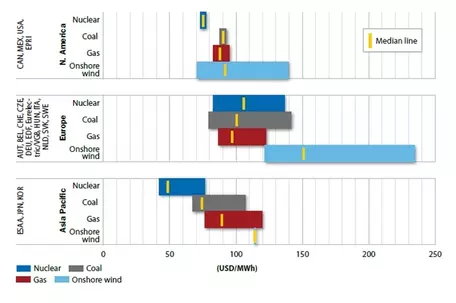
At a 10 percent discount rate, the levelised cost of nuclear electricity generation in OECD countries range between 42 USD/MWh (Korea) and 137 USD/MWh (Switzerland). The share of investment in total levelised generation cost is around 75% while the other cost elements, operation and maintenance costs and fuel cycle costs, represent 15% and 9% respectively. These figures also include costs for refurbishment, waste treatment and decommissioning after a 60-year lifetime.
Assumptions:
- a nuclear power plant lifetime of 60 years
- generation III+ reactor designs which promise enhanced safety features and better economics than many generation II/III reactors currently in operation.
- average lifetime load factor of nuclear generation of 85%.
- CO₂ reference cost of USD 30/tCO₂ for all OECD countries.
Congressional Budget Office, U.S. Energy Information Agency, MIT
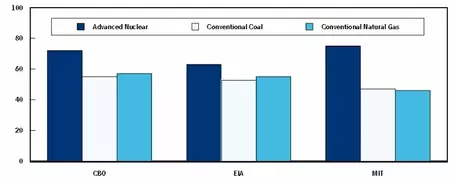
Figure 9. Comparative cost of nuclear power, coal, natural gas in 2006 dollars per megawatt hours from three sources: [1] Congressional Budget Office of the U.S. Congress, Nuclear Power's Role in Generating Electricity; [2] U.S. Environmental Information Agency; and, [3] analysis by Massachusetts Institute of Technology, The Future of Nuclear Power (2003)
Assumptions:
- capital cost recovery period of 40 years
- Generation III reactors designs
- average lifetime load factor of nuclear generation of 85%
- Excludes the cost of possible carbon constraints
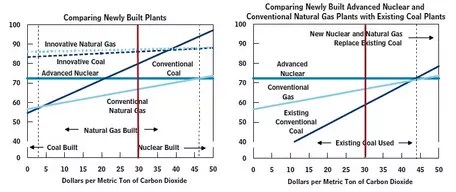
CBO provided additional information on the effect of carbon costs. In the following figure, a vertical red line has been added to the CBO figure at USD 30/tCO₂ to allow coparison to the Organisation for Economic Co-operation and Development (OECD) Nuclear Energy Agency (NEA) study above.
Figure 10. Levelized cost of alternative technologies to generate electricity under carbon charges (2006 dollars per megawatt hour). Source: Congressional Budget Office, 2008, Nuclear Power's Role in Generating Electricity. (red line added for comparison purposes)
Physics and Engineering
Nuclear energy is energy in the nucleus (core) of an atom. (see Basic Nuclear Science) There is enormous energy in the bonds that hold the nucleus together. Breaking those bonds releases that energy. It can be released from atoms in two ways: nuclear fusion and nuclear fission.
Nuclear Fission
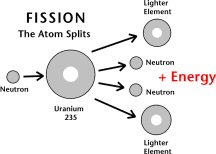
Figure 11. Fission reaction. Source. U.S. Department of EnergyIn nuclear fission, atoms are split apart to form smaller atoms, releasing energy. Today, all commercial nuclear reactors rely upon controlled fission chain reactions. Typically a fissile Uranium-235 or Plutonium-239 nucleus absorbs a neutron, and undergoes nuclear fission. The heavy nucleus splits into two or more lighter nuclei, releasing kinetic energy, gamma rays and free neutrons, collectively known as the products of fission.
Some of the free neutrons produced are then absorbed within the nucleii of other fissionable atoms within the nuclear core, inducing a chain of further nuclear reactions.
The reaction is moderated in rate by utilizing neutron absorbers or substances that slow the nuetron velocity, thus minimizing the chance for successive fission. The most commonly employed neutron moderator is ordinary water or solid graphite; occasionally heavy water is utilized.
Nuclear Fussion
In nuclear fusion, energy is released when atoms are combined or fused together to form a larger atom. This is how the sun produces energy. Fusion is the subject of ongoing research, but it is not yet clear that it will ever be a commercially viable technology for electricity generation.
Nuclear Fuel
Also see: Nuclear Fuel Cycle
The fuel most widely used by nuclear plants for nuclear fission is uranium. Uranium is nonrenewable, though it is a common metalfound in rocks all over the world. Nuclear plants use a certain kind of uranium, referred to as U-235. This kind of uranium is used as fuel because its atoms are easily split apart. Though uranium is quite common, about 100 times more common than silver, U-235 is relatively rare.
Uranium found in natural ores contains two principle isotopes " uranium-238 (99.3%) and uranium-235 (0.7%). The uranium is enriched in uranium-235 before being made into nuclear fuel. Uranium enrichment processes generate a product consisting of 3 to 5 percent uranium-235 for use as nuclear fuel and a product of depleted uranium (about 0.3 percent U-235).
Economically recoverable uranium deposits have been discovered principally in the western United States, Australia, Canada, Central Asia, Africa, and South America. Once uranium is mined, the U-235 must be extracted and processed before it can be used as a fuel. Mined uranium ore typically yields one to four pounds of uranium concentrate (U3O8 or "yellowcake") per ton, or 0.05% to 0.20% U3O8.
Owners and operators of U.S. civilian nuclear power reactors purchased the equivalent of 58 million pounds of uranium during 2011. Uranium delivered to U.S. reactors in 2011 came from six continents:
- 9% of delivered uranium came from the United States
- 91% of delivered uranium was of foreign-origin:
- 40% originated in Kazakhstan, Russia and Uzbekistan
- 31% was from Australia and Canada
- 20% came from Namibia, Niger, and other countries
See also: Olympic Dam, South Australia
Uranium Recovery (Extraction) Methods
The mining and milling activities associated with uranium recovery involve two distinct extraction processes:
- In mining, uranium ore is extracted from the Earth, typically through deep underground shafts or shallow open pits. This traditional method has largely become obsolete since the introduction of alternative extraction methods, in which chemical solutions are injected into underground deposits to dissolve (leach) uranium from the ore.
- In milling, the mined ore is crushed, and a second extraction process chemically leaches the uranium from the ore and concentrates it to produce a material, which is called "yellowcake" because of its yellowish color.
A conventional uranium mill (shown in Figure 3.) is a chemical plant that extracts uranium using the following process:
- Trucks deliver uranium ore to the mill, where it is crushed into smaller particles before being extracted (or leached). In most cases, sulfuric acid is the leaching agent, but alkaline solutions can also be used to leach the uranium from the ore. (In addition to extracting 90 to 95 percent of the uranium from the ore, the leaching agent also extracts several other "heavy metal" constituents, including molybdenum, vanadium, selenium, iron, lead, and arsenic.)
- The mill then concentrates the extracted uranium to produce "yellowcake".
- Finally, the yellowcake is transported to a uranium conversion facility, where it is processed through the stages of the nuclear fuel cycle to produce fuel for use in nuclear power reactors.
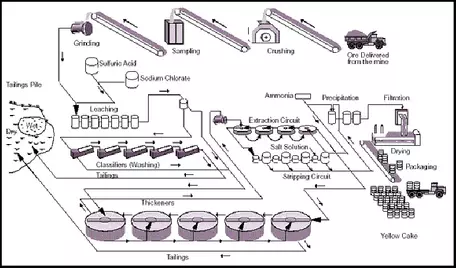
Figure 12. Conventional Uranium Mill. Source: U.S. Energy Information Administration, Office of Electricity, Renewables, and Uranium Statistics
Similarly, there are two primary milling methods " conventional milling and in situ recovery (ISR) " that are currently used to extract uranium from mined ore. A third method, known as heap leaching, has also been used to extract uranium from ore at conventional mills, and ion-exchange procedures have been used to separate uranium from the liquid extract at both conventional mills and ISR facilities. However, heap leach and ion-exchange facilities in the United States that were initially licensed by the U.S. Nuclear Regulatory Commission (NRC) no longer operate and are in the process of decommissioning.
The uranium fuel cycle begins by mining and milling uranium ore to produce U3O8, also known as "yellow cake," which is then converted into uranium hexafluoride (UF6). The UF6 is then enriched before being made into nuclear fuel. Throughout the global nuclear industry, uranium is enriched by one of two methods: gaseous diffusion or gas centrifuge. A third method " laser enrichment " has been proposed for use in the United States.
Fabrication
Nuclear fuel fabrication is the stage of the nuclear fuel cycle in which enriched uranium hexafluoride (UF6) gas is converted into fuel for nuclear power reactors. Fabrication also can involve Mixed oxide fuel (MOX), which is a combination of uranium and plutonium components.
Reactors
See main article: Nuclear power reactor
Nuclear reactors are large machines that contain and control nuclear chain reactions, while releasing heat at a controlled rate.
A nuclear power plant uses the heat supplied by the nuclear reactor to turn water into steam, which drives turbine-generators that generate electricity.
The 435 operational reactors in the world are of six types, as shown in Table 1.
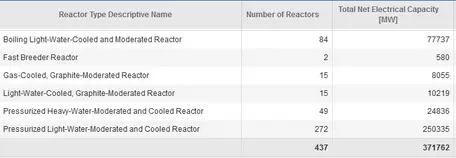
Table 2. Types of Nuclear Power Reactors, Worldwide
Source: International Atomic Energy Agency (IAEA) Power Reactor Information System
There are two types of reactors used in the United States: boiling-water reactors and pressurized-water reactors. Of the 104 nuclear power plants licensed to operate in the United States, 69 are Pressurized Light-Water-Moderated and Cooled Ractors and 35 Boiling Light-Water-Cooled and Moderated Reactors.
52 of the 64 plants under construction are on the Pressurized Light-Water-Moderated and Cooled Reactor type.
Pressurized-Water Reactors
Pressurized Light-Water-Moderated and Cooled Reactors are the most common type of reactor in the world, accounting for 272 or 62% or the 437 operational reactors. Pressurized Heavy-Water-Moderated and Cooled Reactors accont for another 49 (11%) of the world's operational reactos reactors. The two reactors at Three Mile Island in the United States, including the one that was permanently shut down following the accident in 1979 are/were of this type.
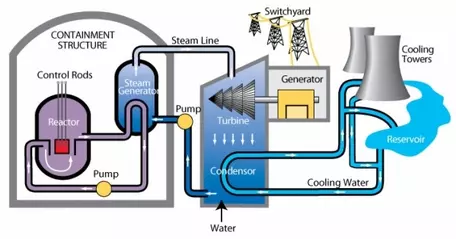
In a typical commercial pressurized light-water reactor the reactor core generates heat, pressurized-water in the primary coolant loop carries the heat to the steam generator, inside the steam generator heat from the primary coolant loop vaporizes the water in a secondary loop producing steam, the steam line directs the steam to the main turbine causing it to turn the turbine generator, which produces electricity. The unused steam is exhausted to the condenser where it is condensed into water. The resulting water is pumped out of the condenser with a series of pumps, reheated, and pumped back to the steam generator. The reactors core contains fuel assemblies which are cooled by water, which is force-circulated by electrically powered pumps. Emergency cooling water is supplied by other pumps, which can be powered by onsite diesel generators. Other safety systems, such as the containment cooling system, also need power.
Figure 13. Schematic of Pressurized-Water Reactor and Reactor Vessel. Source: U.S. Energy Information Administration
Boiling-Water Reactors
Boiling Light-Water-Cooled and Moderated Reactors are the secod most common type of reactor in the world, accounting for 84 or 19% or the 435 operational reactors. The six reactors at Fukushima Daiichi, four of which are permantly shut down as a result of the severe damage caused by a devastating earthquake and tsunami in 2011, are of this type.
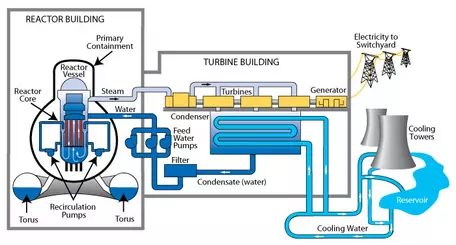
In a typical commercial boiling water reactor the reactor core creates heat, a steam-water mixture is produced when very pure water (reactor coolant) moves upward through the core absorbing heat, the steam-water mixture leaves the top of the core and enters the two stages of moisture separation where water droplets are removed before the steam is allowed to enter the steam line, the steam line directs the steam to the main turbine causing it to turn the turbine generator, which produces electricity. The unused steam is exhausted to the condenser where it is condensed into water. The resulting water is pumped out of the condenser with a series of pumps, reheated, and pumped back to the reactor vessel. The reactor's core contains fuel assemblies which are cooled by water, which is force-circulated by electrically powered pumps. Emergency cooling water is supplied by other pumps which can be powered by onsite diesel generators. Other safety systems, such as the containment cooling system, also need electric power.
Source: Tennessee Valley Authority
Figure 14. Schematic of Boiling Water Reactor. Source: Tennessee Valley Authority and U.S. Energy Information Administration
See also:
- Light water graphite reactor (RBMK)
- Fast neutron reactors (FBR)
- Advanced nuclear power reactors
- Small Nuclear Power reactors
- Nuclear Power Plants
Safety, Security and Safeguards
In relation to nuclear power:
- Safety focuses on unintended conditions or events leading to radiological releases from authorised activities. It relates mainly to intrinsic problems or hazards.
- Security focuses on the intentional misuse of nuclear or other radioactive materials by non-state elements to cause harm. It relates mainly to external threats to materials or facilities.
- Safeguards focus on restraining activities by states that could lead to acquisition of nuclear weapons. It concerns mainly materials and equipment in relation to rogue governments.
Safety
See: Safety of nuclear power reactors
As described above, there have been three significant accidents in the 50-year history of civil nuclear power generation:
- Three Mile Island (USA 1979) where the reactor was severely damaged but radiation was contained and there were no adverse health or environmental consequences
- Chernobyl (Ukraine 1986) where the destruction of the reactor by steam explosion and fire killed 31 people and had significant health and environmental consequences. Apart from the initial deaths, the number of deaths resulting from the accident is unclear and a subject of considerable controversy.
- Fukushima (Japan 2011) where three old reactors (together with a fourth) were written off and the effects of loss of cooling due to a huge tsunami were inadequately contained.
These three significant accidents occurred during more than 14,500 reactor-years of civil operation. Of all the accidents and incidents, only the Chernobyl and Fukushima accidents resulted in radiation doses to the public greater than those resulting from the exposure to natural sources. The Fukushima accident resulted in some radiation exposure of workers at the plant, but not such as to threaten their health, unlike Chernobyl. Other incidents (and one 'accident') have been completely confined to the plant.
Apart from Chernobyl, no nuclear workers or members of the public have ever died as a result of exposure to radiation due to a commercial nuclear reactor incident. Most of the serious radiological injuries and deaths that occur each year (2-4 deaths and many more exposures above regulatory limits) are the result of large uncontrolled radiation sources, such as abandoned medical or industrial equipment. (There have also been a number of accidents in experimental reactors and in one military plutonium-producing pile - at Windscale, UK, in 1957, but none of these resulted in loss of life outside the actual plant, or long-term environmental contamination.)
It should be emphasised that a commercial-type power reactor simply cannot under any circumstances explode like a nuclear bomb. The fuel in a nuclear reactor is not enriched beyond about 5% and a bomb require a much high level of enrichment.
The International Atomic Energy Agency (IAEA) was set up by the United Nations in 1957. One of its functions was to act as an auditor of world nuclear safety, and this role was increased greatly following the Chernobyl accident. It prescribes safety procedures and the reporting of even minor incidents. Its role has been strengthened since 1996 (see later section). Every country which operates nuclear power plants has a nuclear safety inspectorate and all of these work closely with the IAEA.
While nuclear power plants are designed to be safe in their operation and safe in the event of any malfunction or accident, no industrial activity can be represented as entirely risk-free. Incidents and accidents may happen, and as in other industries, will lead to progressive improvement in safety.
Operational safety is a prime concern for those working in nuclear plants. Radiation doses are controlled by the use of remote handling equipment for many operations in the core of the reactor. Other controls include physical shielding and limiting the time workers spend in areas with significant radiation levels. These are supported by continuous monitoring of individual doses and of the work environment to ensure very low radiation exposure compared with other industries.
Defence-in-Depth: To achieve optimum safety, nuclear plants in the western world operate using a 'defence-in-depth' approach, with multiple safety systems supplementing the natural features of the reactor core. Key aspects of the approach are:
- high-quality design & construction,
- equipment which prevents operational disturbances or human failures and errors developing into problems,
- comprehensive monitoring and regular testing to detect equipment or operator failures,
- redundant and diverse systems to control damage to the fuel and prevent significant radioactive releases,
- provision to confine the effects of severe fuel damage (or any other problem) to the plant itself.
These can be summed up as: Prevention, Monitoring, and Action (to mitigate consequences of failures).
Physical Barriers: The safety provisions include a series of physical barriers between the radioactive reactor core and the environment, the provision of multiple safety systems, each with backup and designed to accommodate human error. Safety systems account for about one quarter of the capital cost of such reactors. As well as the physical aspects of safety, there are institutional aspects which are no less important - see following section on International Collaboration.
The barriers in a typical plant are: the fuel is in the form of solid ceramic (UO2) pellets, and radioactive fission products remain largely bound inside these pellets as the fuel is burned. The pellets are packed inside sealed zirconium alloy tubes to form fuel rods. These are confined inside a large steel pressure vessel with walls up to 30 cm thick - the associated primary water cooling pipework is also substantial. All this, in turn, is enclosed inside a robust reinforced concrete containment structure with walls at least one metre thick. This amounts to three significant barriers around the fuel, which itself is stable up to very high temperatures.
These barriers are monitored continually. The fuel cladding is monitored by measuring the amount of radioactivity in the cooling water. The high pressure cooling system is monitored by the leak rate of water, and the containment structure by periodically measuring the leak rate of air at about five times atmospheric pressure.
Looked at functionally, the three basic safety functions in a nuclear reactor are:
- to control reactivity,
- to cool the fuel and
- to contain radioactive substances.
The main safety features of most reactors are inherent - negative temperature coefficient and negative void coefficient. The first means that beyond an optimal level, as the temperature increases the efficiency of the reaction decreases (this in fact is used to control power levels in some new designs). The second means that if any steam has formed in the cooling water there is a decrease in moderating effect so that fewer neutrons are able to cause fission and the reaction slows down automatically.
Beyond the control rods which are inserted to absorb neutrons and regulate the fission process, the main engineered safety provisions are the back-up emergency core cooling system (ECCS) to remove excess heat (though it is more to prevent damage to the plant than for public safety) and the containment.
Active and Passice Safety Systems: Traditional reactor safety systems are 'active' in the sense that they involve electrical or mechanical operation on command. Some engineered systems operate passively, eg pressure relief valves. Both require parallel redundant systems. Inherent or full passive safety design depends only on physical phenomena such as convection, gravity or resistance to high temperatures, not on functioning of engineered components. All reactors have some elements of inherent safety as mentioned above, but in some recent designs the passive or inherent features substitute for active systems in cooling etc. Such a design would have averted the Fukushima accident, where loss of electrical power resulted is loss of cooling function.
Nuclear power plants are designed with sensors to shut them down automatically in an earthquake, and this is a vital consideration in many parts of the world.
In both the Three Mile Island (TMI) and Fukushima accidents the problems started after the reactors were shut down " immediately at TMI and after an hour at Fukushima, when the tsunami arrived. The need to remove decay heat from the fuel was not met in each case, so core melting started to occur within a few hours. Cooling requires water circulation and an external heat sink. If pumps cannot run due to lack of power, gravity must be relied upon, but this will not get water into a pressurised system " either reactor pressure vessel or containment. Hence there is provision for relieving pressure, sometimes with a vent system, but this must work and be controlled without power. There is a question of filters or scrubbers in the vent system: these need to be such that they do not block due to solids being carried. Ideally any vent system should deal with any large amounts of hydrogen, as at Fukushima, and have minimum potential to spread radioactivity outside the plant.
The Three Mile Island accident in 1979 demonstrated the importance of the inherent safety features. Despite the fact that about half of the reactor core melted, radionuclides released from the melted fuel mostly plated out on the inside of the plant or dissolved in condensing steam. The containment building which housed the reactor further prevented any significant release of radioactivity. The accident was attributed to mechanical failure and operator confusion. The reactor's other protection systems also functioned as designed. The emergency core cooling system would have prevented any damage to the reactor but for the intervention of the operators.
Investigations following the accident led to a new focus on the human factors in nuclear safety. No major design changes were called for in western reactors, but controls and instrumentation were improved significantly and operator training was overhauled.
Human Performance and Error: A 2007 US Department of Energy (DOE) Human Performance Handbook notes that "The aviation industry, medicine, the commercial nuclear power industry, the US Navy, DOE and its contractors, and other high-risk, technologically complex industries have adopted human performance principles, concepts, and practices to consciously reduce human error and bolster defences in order to reduce accidents and mishaps." "About 80 percent of all events are attributed to human error. In some industries, this number is closer to 90 percent. Roughly 20 percent of occurrences involve equipment failures. When the 80 percent human error is broken down further, it reveals that the majority of errors associated with events stem from latent organizational weaknesses (perpetrated by humans in the past that lie dormant in the system), whereas about 30 percent are caused by the individual worker touching the equipment and systems in the facility. Clearly, focusing efforts on reducing human error will reduce the likelihood of occurrences and events." Following the Fukushima accident the focus has been on the organisational weaknesses which increase the likelihood of human error.
By way of contrast to western safety engineering, the Chernobyl reactor did not have a containment structure like those used in the West or in post-1980 Soviet designs. The main positive outcome of this accident for the industry was the formation of the World Association of Nuclear Operators (WANO), building on the US precedent.
At Fukushima Daiichi in March 2011 the three operating reactors shut down automatically, and were being cooled as designed by the normal residual heat removal system using power from the back-up generators, until the tsunami swamped them an hour later. The emergency core cooling systems then failed. Days later, a separate problem emerged as spent fuel ponds lost water. Detailed analysis of the accident continues, but the main results include more attention being given to siting criteria and the design of back-up power and post-shutdown cooling, as well as provision for venting the containment of that kind of reactor and other emergency management procedures.
Severe Accident Management or Mitigation: In addition to engineering and procedures which reduce the risk and severity of accidents, all plants have guidelines for Severe Accident Management or Mitigation (SAM). These conspicuously came into play after the Fukushima accident, where staff had immense challenges in the absence of power and with disabled cooling systems following damage done by the tsunami. The experience following that accident is being applied not only in design but also in such guidelines, and peer reviews on nuclear plants will focus more on these than previously.
In mid 2011 the IAEA Incident and Emergency Centre launched a new secure web-based communications platform to unify and simplify information exchange during nuclear or radiological emergencies. The Unified System for Information Exchange on Incidents and Emergencies (USIE) has been under development since 2009 but was actually launched during the emergency response to the accident at Fukushima.
Flooding: Nuclear plants are usually built close to water bodies, for the sake of cooling. The site licence takes account of worst case flooding scenarios as well as other possible natural disasters and, more recently, the possible effects of climate change. As a result, all the buildings with safety-related equipment are situated on high enough platforms so that they stand above submerged areas in case of flooding events. As an example, French Safety Rules criteria for river sites define the safe level as above a flood level likely to be reached with one chance in one thousand years, plus 15%, and similar regarding tides for coastal sites. Occasionally in the past some buildings have been sited too low, so that they are vulnerable to flood or tidal and storm surge, so engineered countermeasures have been built.
Hydrogen: In any light-water nuclear power reactor, hydrogen is formed by radiolytic decomposition of water. This needs to be dealt with to avoid the potential for explosion with oxygen present, and many reactors have been retrofitted with passive autocatalytic hydrogen recombiners in their containment, replacing external recombiners that needed to be connected and powered, isolated behind radiological barriers.
WANO: here is a great deal of international cooperation on nuclear safety issues, in particular the exchange of operating experience under the auspices of the World Association of Nuclear Operators (WANO) which was set up in 1989.
The IAEA Convention on Nuclear Safety (CNS) was drawn up during a series of expert level meetings from 1992 to 1994 and was the result of considerable work by Governments, national nuclear safety authorities and the IAEA Secretariat. Its aim is to legally commit participating States operating land-based nuclear power plants to maintain a high level of safety by setting international benchmarks to which States would subscribe. However, States are constrained by internal legal limits, since nuclear plant operation and regulation is recognized as a matter for national sovereignty. The Convention entered into force in October 1996. As of September 2009, there were 79 signatories to the Convention, 66 of which are contracting parties, including all countries with operating nuclear power plants.
Aging: Several issues arise in prolonging the lives of nuclear plants which were originally designed for 30 or 40-year operating lives. Systems, structures and components (SSC) whose characteristics change gradually with time or use are the subject of attention. The follow figure shows the operational age of the 435 reactors in operation on october 1, 2012.
Figure 15. Operational Reactors by age (November 21, 2012) Source: International Atomic Energy Agency (IAEA) Power Reactor
[narrowimage 62998
Information System. Age of reactor is determined by its first grid connection. Reactors connected in current year (2012) are assigned with the age 0 years.
International Nuclear Event Scale: The International Nuclear Event Scale (INES) was developed by the IAEA and OECD in 1990 to communicate and standardise the reporting of nuclear incidents or accidents to the public. The scale runs from a zero event with no safety significance to 7 for a "major accident" such as Chernobyl. Three Mile Island rated 5, as an "accident with off-site risks" though no harm to anyone, and a level 4 "accident mainly in installation" occurred in France in 1980, with little drama. Another accident rated at level 4 occurred in a fuel processing plant in Japan in September 1999. Other accidents have been in military plants .
Terrorism: Since the World Trade Centre attacks in New York in 2001 there has been concern about the consequences of a large aircraft being used to attack a nuclear facility with the purpose of releasing radioactive materials. Various studies have looked at similar attacks on nuclear power plants. They show that nuclear reactors would be more resistant to such attacks than virtually any other civil installations
Advanced Reactors: The designs for nuclear plants being developed for implementation in coming decades contain numerous safety improvements based on operational experience. The first two of these advanced reactors began operating in Japan in 1996. One major feature they have in common (beyond safety engineering already standard in Western reactors) is passive safety systems, requiring no operator intervention in the event of a major malfunction.
Security
Security focuses on the intentional misuse of nuclear or other radioactive materials by non-state elements to cause harm. It relates mainly to external threats to materials or facilities.
Each nation with a nuclear program is responsible for the security of materials. However, the The nuclear safety inspectorates of all relevant nations work closely with the International Atomic Energy Agency (IAEA) on shared security issues.
In the United Sates, the U.S. Nuclear Regulatory Commission (NRC) has responsibity for security at nuclear power plants, working closely with a number of other agencies. While security of the nuclear facilities and materials the NRC regulates has always been a priority, the terrorist attack of Sept. 11, 2001, brought heightened scrutiny and spurred more stringent security requirements. The NRC states:
This heightened security is achieved in layers, with multiple approaches concurrently at work " just as safety in nuclear power plants is accomplished through duplicate back-up systems. To begin with, nuclear power plants are inherently secure, robust structures, built to withstand hurricanes, tornadoes and earthquakes. Additional security measures are in place: well trained and armed security officers; equipment and structures, including physical barriers, intrusion detection and surveillance systems; and access controls. Another layer of protection is in place for coordinating threat information and response. The NRC works closely with the Department of Homeland Security (DHS), FBI, intelligence agencies, the departments of Defense and Energy, states, and local law enforcement. These relationships ensure the NRC can act quickly on any threats that might affect its licensed facilities and allows effective emergency response from "outside the fence" should a serious terrorist attack occur.
For several years following 9/11, the NRC required many security enhancements at its licensed power reactors, decommissioning reactors, independent spent fuel storage installations, research and test reactors, uranium conversion facilities, gaseous diffusion plants, fuel fabrication facilities, large irradiators, manufacturers and distributors, transportation, and licensees with greater than IAEA category 2 material. The NRC directed nuclear power plants and fuel fabrication facilities to upgrade their physical security plans, security officer training and qualification plans, and contingency plans. These facilities now have, among other heightened measures:
- More patrols
- Stronger and more capable security forces
- Additional physical barriers
- Greater stand-off distances for vehicle checks
- More restrictive site access controls
- Enhanced emergency preparedness and response plans
Nuclear power plants and category I fuel fabrication facilities must show they can defend against a set of adversary characteristics outlined in the NRC's Design Basis Threat (DBT). While the details of the DBT are not public, in general, it outlines threats and adversary characteristics that these facilities must protect against with high assurance. The NRC supplemented the DBT in April 2003 and March 2006 to incorporate insights from the 9/11 attacks. . . .
While many of the details of the NRC's security requirements are withheld to avoid assisting potential adversaries, general information about the security enhancements of the past few years is available to the general public from a variety of sources, including NRC's Web site, NRC publications, and other publicly available sources.
In other areas, NRC states:
Cyber Security: While the September 11 attacks didn't have a "cyber" component, cyber security is a growing and serious issue. The NRC has already issued a series of advisories and orders requiring nuclear power plants to take certain actions, including enhancing protection of their computer systems. Several new rulemakings are proposing further cyber security requirements. One proposed rule would require nuclear power plants to implement strategies to protect computer systems, detect cyber attacks, and isolate and neutralize cyber intruders. However, it is important to note that computer systems that help operate the reactors and other power reactor safety equipment are isolated from the internet to protect against outside intrusion. As suggested by the Energy Policy Act of 2005, the Commission added a cyber threat component to the DBT in January 2007. In addition, the NRC routinely interacts with the DHS's National Cyber Security Division to coordinate federal cyber security activities in the nuclear sector.
Security Against "Dirty Bombs": The security of radioactive materials has been a concern of NRC due to the possibility that such material could be used to build a radiological dispersal device " a type of conventional explosive combined with radioactive material that could spread radioactive contamination. While a so called "dirty bomb" is unlikely to cause substantial deaths or even contaminate a very large area, it could cause panic and disruption. The NRC works with its Agreement States, DHS, DOE, the FBI, and the International Atomic Energy Agency, as well as manufacturers and distributors of nuclear materials, to protect certain radioactive material from theft or diversion. In recent years, required security measures related to nuclear and radioactive material have been increased. Improvements and upgrades have been made to the Nuclear Materials Management and Safeguards System, a joint NRC-DOE database that captures the movement and location of certain forms and quantities of nuclear material. Also, development of the National Source Tracking System is progressing and was slated for operation at the beginning of 2009. To be ready in the event of a radiological or nuclear-related terrorist event, the NRC and other federal agencies have developed guidance for officials to use in response and long-term recovery planning.
Safeguards
Nuclear safeguards (non-proliferation)
Safeguards focus on restraining activities by states that could lead to acquisition of nuclear weapons. It concerns mainly materials and equipment in relation to rogue governments.
The Nuclear Non-proliferation Treaty (NPT), which came into force in 1970, was essentially an agreement among the five existing nuclear weapons states (China, France, the Russian Federation, the UK and the USA) and the other countries interested in nuclear technology. The deal was that assistance and cooperation would be traded for pledges, backed by international scrutiny, that no plant or material would be diverted to weapons' use. Those who refused to be part of the deal would be excluded from international cooperation or trade involving nuclear technology. At present, 189 states plus Taiwan are parties to the NPT. The main countries remaining outside the NPT are Israel, India and Pakistan, thoughNorth Korea has moved to join them.
While nuclear power reactors themselves are not a proliferation concern, enrichment and reprocessing technologies are open to use for other purposes, and have been the cause of proliferation through illicit or unsafeguarded use.
Uranium processed for electricity generation is not useable for weapons. The uranium used in power reactor fuel for electricity generation is typically enriched to about 3-4% of the isotope U-235, compared with weapons-grade which is over 90% U-235. For safeguards purposes uranium is deemed to be "highly enriched" when it reaches 20% U-235. Few countries possess the technological knowledge or the facilities to produce weapons-grade uranium.
Plutonium is produced in the reactor core from a proportion of the uranium fuel. Plutonium contained in spent fuel elements is typically about 60-70% Pu-239, compared with weapons-grade plutonium which is more than 93% Pu-239. Weapons-grade plutonium is not produced in commercial power reactors but in a "production" reactor operated with frequent fuel changes to produce low-burnup material with a high proportion of Pu-239.
The only use for "reactor grade" plutonium is as a nuclear fuel, after it is separated from the high-level wastes by reprocessing. It is not and has never been used for weapons, due to the relatively high rate of spontaneous fission and radiation from the heavier isotopes such as Pu-240 making any such attempted use fraught with great uncertainties.
Traditional safeguards are arrangements to account for and control the use of nuclear materials. This verification is a key element in the international system which ensures that uranium in particular is used only for peaceful purposes.
It is important to understand that nuclear safeguards are a means of reassurance whereby non-nuclear weapons states demonstrate to others that they are abiding by their peaceful commitments. They prevent nuclear proliferation in the same way that auditing procedures build confidence in proper financial conduct and prevent embezzlement. Their specific objective is to verify whether declared (usually traded) nuclear material remains within the civil nuclear fuel cycle and is being used solely for peaceful purposes or not.
Up to the late 1980s it was generally assumed that any undeclared nuclear activities would have to be based on the diversion of nuclear material from safeguards. States acknowledged the possibility of nuclear activities entirely separate from those covered by safeguards, but it was assumed they would be detected by national intelligence activities. There was no particular effort requiring the IAEA to attempt to detect them.
Not until the 1990 NPT Review Conference did some states raise the possibility of making more use of the provisions for "special inspections" in existing NPT Safeguards Agreements, for example. Special inspections can be undertaken at locations other than those where safeguards routinely apply, if there is reason to believe there may be undeclared material or activities.
The inspections act as an alert system providing a warning of the possible diversion of nuclear material from peaceful activities. The system relies on;
- Material Accountability - tracking all inward and outward transfers and the flow of materials in any nuclear facility. This includes sampling and analysis of nuclear material, on-site inspections, review and verification of operating records.
- Physical Security - restricting access to nuclear materials at the site of use.
- Containment and Surveillance - use of seals, automatic cameras and other instruments to detect unreported movement or tampering with nuclear materials, as well as spot checks on-site.
After Fukushima
From Nuclear Energy Policy by Mark Holt
Worldwide concern about nuclear power plant safety rose sharply after the Fukushima accident, which is generally considered to be much worse than the March 1979 Three Mile Island accident in Pennsylvania but not as severe as the April 1986 Chernobyl disaster in the former Soviet Union. The Fukushima disaster resulted in similar levels of radioactive contamination per square meter to that of Chernobyl, but the Fukushima contamination was much less widespread and affected a smaller number of people.
The Fukushima accident has raised particular policy questions for the United States because, unlike Chernobyl, the Fukushima reactors are similar to common U.S. designs. Although the Fukushima accident resulted from a huge tsunami that incapacitated the power plant's emergency diesel generators, the accident dramatically illustrated the potential consequences of any natural catastrophe or other situation that could cause an extended "station blackout" " the loss of alternating current (AC) power. Safety issues related to station blackout include standards for backup batteries, which now are required to provide power for 4-8 hours, and additional measures that may be required to assure backup power. The Institute of Nuclear Power Operations (INPO) released a detailed description of the Fukushima accident in November 2011.
Safety concerns at U.S. reactors were also raised by hydrogen explosions at four of the Fukushima reactors"resulting from a high-temperature reaction between steam and nuclear fuel cladding"and the loss of cooling at the Japanese plant's spent fuel storage pools. Other safety issues that have been raised in the wake of Fukushima include the vulnerability of U.S. nuclear plants to earthquakes, floods, and other natural disasters, the availability of iodine pills to prevent absorption of radioactive iodine released during nuclear accidents, and the adequacy of nuclear accident emergency planning.
Assessment of the aspects of nuclear plant safety highlighted by the Fukushima accident is being applied to the 143 nuclear reactors in the EU's 27 member states, as well as those in any neighbouring states that have decided to take part. These comprehensive and transparent risk and safety assessments, the so-called "stress tests", involved targeted reassessment of each power reactor's safety margins in the light of extreme natural events, such as earthquakes and flooding, as well as on loss of safety functions and severe accident management following any initiating event.
In June 2011 the governments of seven non-EU countries agreed to conduct nuclear reactor stress tests using the EU model. Armenia, Belarus, Croatia, Russia, Switzerland, Turkey and Ukraine signed a declaration that they would conduct stress tests and agreed to peer reviews of the tests by outside experts. Russia had already undertaken extensive checks. (Croatia is co-owner in the Krsko PWR in Slovenia, and Belarus and Turkey plan to build nuclear plants but have none now.)
See also:
- Nuclear safeguards (non-proliferation)
- Nuclear Power Plant Security and Vulnerabilities
- Global Nuclear Energy Partnership (GNEP)
- Nuclear Non-Proliferation Act of 1978, United States
- Nuclear Proliferation Prevention Act of 1994, United States
- Price-Anderson Act of 1957, United States
- Uranium Mill Tailings Radiation Control Act of 1978, United States
- Radiation Exposure Compensation Act of 1990, United States
- Transport of radioactive materials
Environmental impacts
The main environmental concerns for nuclear power are radioactive wastes such as uranium mill tailings, spent (used) reactor fuel, and other radioactive wastes. These materials can remain radioactive and dangerous to human health for thousands of years.
Air pollution and Greenhouse gases
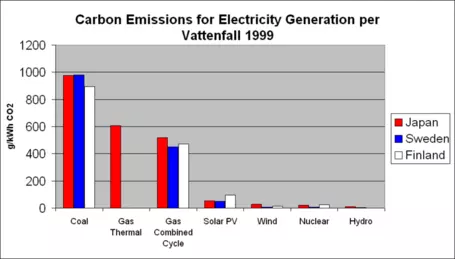
Figure 16. Vattenfall carbon emissions study results. Source Vattenfall Power Company and Japan's Central Research InstituteUnlike fossil fuel-fired power plants, nuclear reactors do not produce air pollution or carbon dioxide while operating. However, the processes for mining and refining uranium ore and making reactor fuel require large amounts of energy. Nuclear power plants have large amounts of metal and concrete, which also require large amounts of energy to manufacture. If fossil fuels are used to make the electricity and manufacture the power plant materials, then the emissions from burning those fuels could be associated with the electricity that nuclear power plants generate.
Use of nuclear power has a net benefit compared to fossil fuels like coal in terms of air quality and emissions of carbon monoxide, oxides of nitrogen, sulfur dioxide, hydrocarbons and particulate matter emissions.
Use of nuclear power also represents a clear net benefit in comparison to the prevailing alternative of burning coal, petroleum or natural gas in conventional power plants because electricity generation from fossil fuels is responsible for a dominant portion of carbon dioxide emissions worldwide (e.g. 41% of U.S. man-made carbon dioxide emissions).
Among carbon-based fuels, coal-fired power plants produce the greatest quantity of carbon dioxide emissions per unit of product electricity (2249 lbs/MWh), with petroleum producing 1672 lbs/(MWh) and natural gas combustion generating 1135 lbs/MWh, the abbreviation being for pounds of carbon dioxide per Megawatt hour of electricity produced.
Nuclear power actually generates less than half of hydroelectric plants in a life-cycle carbon dioxide generation calculation. In life cycle analysis, nuclear energy's greenhouse gas emissions are less than wind (7 to 124 grams of carbon dioxide-equivalents) and less than solar photovoltaic (13 to 731 grams of carbon dioxide-equivalents).
Waste
The main environmental concerns for nuclear power are radioactive wastes such as uranium mill tailings, spent (used) reactor fuel, and other radioactive wastes. These materials can remain radioactive and dangerous to human health for thousands of years. They are subject to special regulations that govern their handling, transportation, storage, and disposal to protect human health and the environment. In the United States, the U.S. Nuclear Regulatory Commission regulates the operation of nuclear power plants.
Radioactive wastes are classified as low-level and high-level. The radioactivity in these wastes can range from just above natural background levels, as in mill tailings, to much higher levels, such as in spent reactor fuel or the parts inside a nuclear reactor. The radioactivity of nuclear waste decreases with the passage of time through a process called radioactive decay. The amount of time necessary to decrease the radioactivity of radioactive material to one-half the original level is called the radioactive half-life of the material. Radioactive waste with a short half-life is often stored temporarily before disposal in order to reduce potential radiation doses to workers who handle and transport the waste, as well as to reduce the radiation levels at disposal sites.
By volume, most of the waste related to the nuclear power industry has a relatively low-level of radioactivity.
High-Level Waste
High-level radioactive waste is uranium fuel that has been used in a nuclear power reactor and is "spent" or is no longer efficient in generating power to the reactor to produce electricity. Spent fuel is thermally hot as well as being highly radioactive, requiring remote handling and shielding. The basic fuel of a nuclear power reactor contains uranium 235, which is in ceramic pellets inside of metal rods. Before these fuel rods are used, they are only slightly radioactive and may be handled without special shielding. During the nuclear reaction, the fuel "fissions," which means that an atom of uranium is split, releasing two or three neutrons and a small amount of heat. The released neutrons then strike other atoms, causing them to split, and a chain reaction is formed, which releases large amounts of heat. This heat is used to generate electricity at nuclear power plants.
The splitting of relatively heavy uranium atoms during reactor operation creates radioactive isotopes of several lighter elements, such as cesium-137 and strontium-90, called "fission products," that account for most of the heat and penetrating radiation in high-level waste. Some uranium atoms also capture neutrons from fissioning uranium atoms nearby to form heavier elements like plutonium. These heavier-than-uranium, or "transuranic," elements do not produce nearly the amount of heat or penetrating radiation that fission products do, but they take much longer to decay. Transuranic wastes, also called "TRU," therefore account for most of the radioactive hazard remaining in high-level waste after a thousand years.
Radioactive isotopes will eventually decay, or disintegrate, to harmless materials. However, while they are decaying, they emit radiation. Some isotopes decay in hours or even minutes, but others decay very slowly. Strontium-90 and cesium-137 have half-lives of about 30 years (that means that half the radioactivity of a given quantity of strontium-90, for example, will decay in 30 years). Plutonium-239 has a half-life of 24,000 years.
High-level wastes are hazardous to humans and other life forms because of their high radiation levels that are capable of producing fatal doses during short periods of direct exposure. For example, ten years after removal from a reactor, the surface dose rate for a typical spent fuel assembly exceeds 10,000 rem/hour, whereas a fatal whole-body dose for humans is about 500 rem (if received all at one time). Furthermore, if constituents of these high-level wastes were to get into ground water or rivers, they could enter into food chains. Although the dose produced through this indirect exposure is much smaller than a direct exposure dose, there is a greater potential for a larger population to be exposed.
Reprocessing refers generally to the processes necessary to separate spent nuclear reactor fuel into material that may be recycled for use in new fuel and material that would be discarded as waste. Reprocessing separates residual uranium and unfissioned plutonium from the fission products. The uranium and plutonium can be used again as fuel.
There is no commercial reprocessing of nuclear power fuel in the United States at present; almost all existing commercial high-level waste is in the form of unreprocessed spent fuel. Some reprocessing of fuel has occurred government-owned plutonium production reactors and from naval, research and test reactors. A small amount of liquid high-level waste was generated from the reprocessing of commercial power reactor fuel in the 1960's and early 1970's.
Storage and Disosal of High-Level Waste in the United States
At this time there are no facilities for permanent disposal of high-level radioactive waste. Since the only way radioactive wastes finally become harmless is through decay, which for some isotopes contained in high-level wastes can take hundreds of thousands of years, the wastes must be stored in a way that provides adequate protection for very long times.
The spent fuel rods from nuclear power plants must be handled and stored with the same care as separated high-level waste, since they contain the highly-radioactive fission products plus uranium and plutonium. Spent fuel is currently being stored in large water-cooled pools and dry storage casks at nuclear power plants. Some is also stored at facilities at West Valley, New York, Morris, Illinois, and Idaho National Engineering and Environmental Laboratory.
Existing high-level wastes from reprocessing are presently stored at West Valley, New York; Hanford, Washington; Idaho Falls, Idaho; and Savannah River, South Carolina. Liquid high-level wastes are stored in large underground tanks of either stainless steel or carbon steel, depending on whether they are acid or alkaline. Some of the liquid waste has been solidified into glass, ceramic slag, salt cake and sludge.
In 1982, the U.S. Congress enacted the Nuclear Waste Policy Act (NWPA) and on January 7, 1983, the President signed it into law. This legislation defined the Federal Government's responsibility to provide permanent disposal in a deep geologic repository for spent fuel and high-level radioactive waste from commercial and defense activities. Under amended provisions (1987) of this Act, the Department of Energy (DOE) has the responsibility to locate, build, and operate a repository for such wastes. The NRC has the responsibility to establish regulations governing the construction, operation, and closure of the repository, consistent with environmental standards established by the U.S. Environmental Protection Agency.
The 1987 amendments required DOE to evaluate only the suitability of the site at Yucca Mountain, Nevada, for a geologic disposal facility. In addition, the amendments outlined a detailed approach for the disposal of high-level radioactive waste involving review by the President, Congress, State and Tribal governments, NRC and other Federal agencies.
In February 2002, after many years of studying the suitability of the site, DOE recommended to the President that the Yucca Mountain site be developed as a long-term geologic repository for high-level waste. In April 2002, the Governor of Nevada notified Congress of his State's objection to the proposed repository. Subsequently, Congress voted to override the objection of the state.
DOE is preparing a license application to submit to the NRC for construction authorization for a repository at Yucca Mountain. Although DOE's earlier plans were to submit the license application to the NRC in December 2004, it has been delayed. The Act specifies that the NRC will issue a decision on the license application within three years after receiving the DOE application. The NRC will issue a license only if DOE can demonstrate that it can construct and operate the repository safely and comply with NRC regulations.
See also: Synroc
Low-Level Waste
Low-level wastes, which are generally defined as radioactive wastes other than high-level and wastes from uranium recovery operations, are commonly disposed of in near-surface facilities rather than in a geologic repository that is required for high-level wastes. There is no intent to recover the wastes once they are disposed of.
Low-level waste includes items that have become contaminated with radioactive material or have become radioactive through exposure to neutron radiation. This waste typically consists of contaminated protective shoe covers and clothing, wiping rags, mops, filters, reactor water treatment residues, equipments and tools, luminous dials, medical tubes, swabs, injection needles, syringes, and laboratory animal carcasses and tissues. The radioactivity can range from just above background levels found in nature to much higher levels in certain cases such as parts from inside the reactor vessel in a nuclear power plant.
In the United States, low-level waste is typically stored on-site by licensees, either until it has decayed away and can be disposed of as ordinary trash, or until amounts are large enough for shipment to a low-level waste disposal site in containers approved by the Department of Transportation.
Part 61 of the NRC's regulations (Title 10 of the Code of Federal Regulations) sets forth the procedures, criteria, terms and conditions for licensing sites for land disposal of low-level waste. The requirements established under Part 61 also provide the basis for Agreement State regulations, since State rules must be compatible with NRC requirements. Additionally, 10 CFR 20.2002is available for use by licensees for disposal of low-level wastes that typically are a small fraction of the Class A limits in Part 61, and for which the extensive controls in Part 61 are not needed to ensure protection of public health and safety and the environment.
There have been seven operating commercial facilities in the United States licensed to dispose of low-level radioactive wastes. They are located at (1) West Valley, New York; (2) Maxey Flats near Morehead, Kentucky; (3) Sheffield, Illinois; (4) Beatty, Nevada; (5) Hanford, Washington; (6) Clive, Utah; and (7) Barnwell, South Carolina. At the present time, only the latter three sites are receiving waste for disposal; they are regulated by the states. The West Valley, Maxey Flats, Sheffield and Beatty sites have permanently stopped receiving wastes. Burial of transuranic waste is limited at all of the sites. Transuranic waste includes material contaminated with radioactive elements (e.g., neptunium, americium, plutonium) that are artificially made and is produced primarily from reprocessing spent fuel and from use of plutonium in fabrication of nuclear weapons.
In 2000, low-level waste disposal facilities received about 3.3 million cubic feet of commercially generated radioactive waste. Of this, 8.2% came from nuclear reactors, 83.8% from industrial users, 7.6% from government sources (other than nuclear weapons sites), 0.2% from academic users, and the rest was undefined.
Mill Tailings
Another type of radioactive waste consists of tailings generated during the milling of certain ores to extract uranium or thorium. These wastes have relatively low concentrations of radioactive materials with long half-lives. Tailings contain radium (which, through radioactive decay, becomes radon, a radioactive gas), thorium, and small residual amounts of uranium that were not extracted during the milling process. Part 40, Appendix A of the NRC's regulations (10 CFR) sets forth procedures and criteria for the disposal of mill tailings and for the perpetual surveillance and maintenance of the disposal site.
The uranium fuel cycle begins by extracting and milling natural uranium ore to produce "yellow cake," a varying mixture of uranium oxides. Low-grade natural ores contain about 0.05 to 0.3% by weight of uranium oxide while high-grade natural ores can contain up to 70% by weight of uranium oxide. Uranium found in natural ores contains two principle isotopes " uranium-238 (99.3%) and uranium-235 (0.7%). The uranium is enriched in uranium-235 before being made into nuclear fuel. Uranium enrichment processes generate a product consisting of 3 to 5 percent uranium-235 for use as nuclear fuel and a product of depleted uranium (about 0.3 percent U-235). The depleted uranium has some commercial applications including counterweights and antitank armaments. However, the commercial demand for depleted uranium is currently much less than the amounts generated. For instance, the U.S. Department of Energy (DOE) has about 750,000 metric tons of depleted uranium in storage. Under the U.S. Enrichment Corporation Privatization Act, DOE is required to accept depleted uranium from a U.S. Nuclear Regulatory Commission (NRC) licensed uranium enrichment facility if the depleted uranium is determined to be low-level radioactive waste. If the depleted uranium has no commercial use, the licensee can transfer the material to DOE or dispose of it at a commercial disposal site if it meets the disposal site's requirements.
See also:
- Nuclear waste management
- Nuclear Waste Policy Act of 1982, United States
Spent Reactor Fuel Storage and Power Plant Decommissioning
Spent reactor fuel assemblies are highly radioactive and must initially be stored in specially designed pools resembling large swimming pools, where water cools the fuel and acts as a radiation shield, or in specially designed dry storage containers. An increasing number of reactor operators now store their older spent fuel in dry storage facilities using special outdoor concrete or steel containers with air cooling. There is currently no permanent disposal facility in the United States for high-level nuclear waste. High-level waste is being stored at nuclear plants.
When a nuclear power plant stops operating, the facility must be decommissioned. This involves safely removing the plant from service and reducing radioactivity to a level that permits other uses of the property. The Nuclear Regulatory Commission has strict rules governing nuclear power plant decommissioning that involve cleanup of radioactively contaminated plant systems and structures, and removal of the radioactive fuel. See: Decommissioning nuclear facilities
Thermal pollution
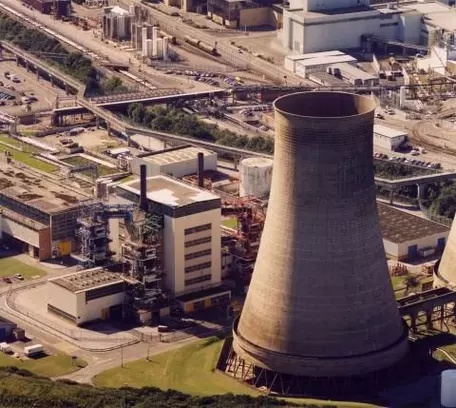
Figure 17. Calderhall nuclear power plant, United Kingdom.Nuclear power plant siting is an important element of the design of new nuclear facilities, since heated water is a major product of these electricity generating facilities. Cooling towers are a key element for mitigating these thermal pollution impacts, but often there is considerable waste heat discharged to receiving waters. Such warmer water produces a fundamental change in the local aquatic ecosystem, often with metabolic impacts to aquatic flora and fauna. Occasionally such impacts are beneficial, in that they can stimulate organism reproduction, but more typically there are adverse impacts of species composition change and biodiversity loss.
The thermal impacts are fully mitigable with sufficient investment in cooling towers and ponds; as early as the 1970s the U.S. Environmental Protection Agency developed mathematical models for use in analyzing thermal plume impacts to receiving waters and assessing mitigation of such plumes.
Major Accidents
See main article: Safety of nuclear power reactors
Three-Mile Island
From: Backgrounder on the Three Mile Island Accident by U.S. Nuclear Regulatory Commission
The accident at the Three Mile Island Unit 2 (TMI